.png)
Customer-First Selling: A Capability that Drives Account Performance

Updated: May 6

Introduction: The End of Generic Selling
Healthcare decision-making has become more complex, more constrained, and more selective. Field teams operate in environments where access is limited, stakeholders are fragmented, and expectations are higher.
Standard customer archetypes and associated messaging once helped field teams operate with consistency. They simplified segmentation and supported scale. That approach does not consistently influence account-level change today.
Customers manage higher patient volumes, tighter staffing, and increasing administrative burden. They also have immediate access to clinical evidence, treatment guidelines, and peer perspectives. This raises expectations for every interaction.
Relevance determines whether engagement happens at all.
Customer-first selling reflects this reality. It is a structured capability that enables representatives to develop a deep understanding of each high-priority account and align resources to the specific needs of that account. This capability directly impacts account performance and market share.
It also changes how the representative is perceived.
Field teams that operate this way position themselves as partners in solving problems that matter to the customer. That positioning drives relevance, access, and sustained influence within the account.
Trends that Influence Customer Accounts
Several structural forces are reshaping how decisions are made across healthcare accounts. These forces explain why traditional sales approaches struggle to drive impact.
Workforce Pressure is Limiting Access
In the United States, 92 million people live in primary care shortage areas, increasing demand on providers and limiting time for engagement
Healthcare leaders continue to cite workforce shortages, financial pressure, and regulatory complexity as dominant forces shaping operations
These pressures reduce availability and increase selectivity in how providers engage with external partners.
Payers are Actively Constraining Treatment Decisions
Payer influence extends beyond guidance into direct impact on access and execution.
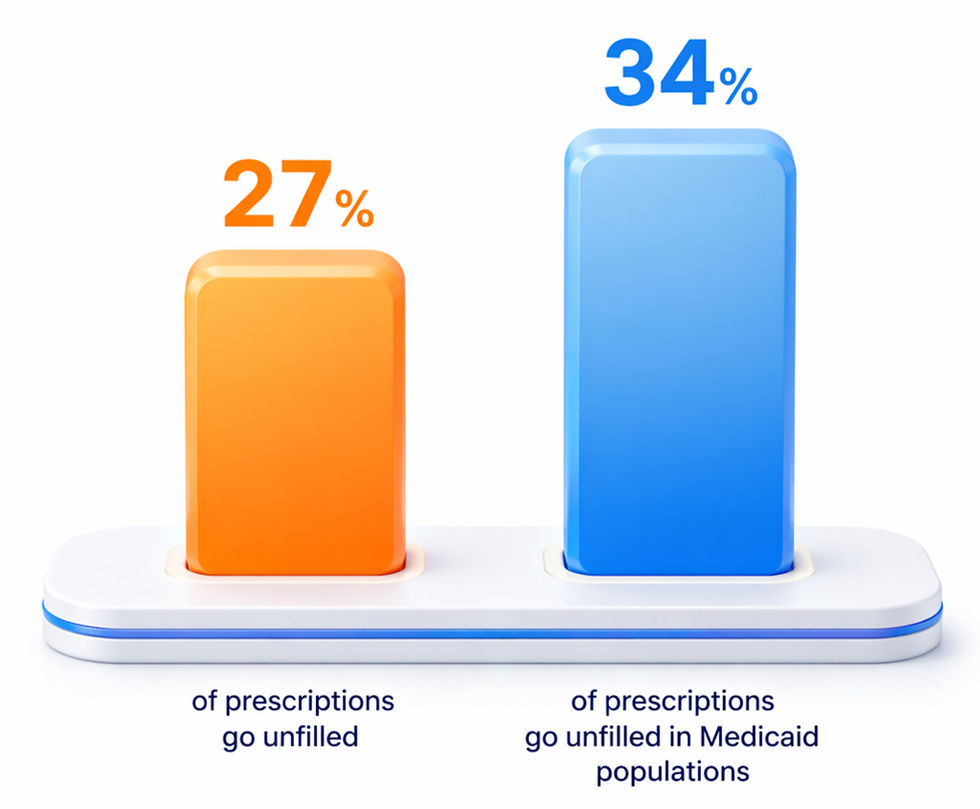
Clinical intent does not guarantee treatment execution. Payer dynamics directly shape what happens after a prescription decision is made.
Care Delivery is Expanding Across Settings
Care continues to move into outpatient and specialty environments. This redistributes decision-making across more stakeholders and locations.
More than 40% of healthcare executives expect care delivery transformation to significantly impact their strategy
Implications for Field Teams
These dynamics create a more complex account environment:
Decision-making involves multiple stakeholders
Financial and operational constraints shape treatment pathways
Access is limited and highly selective
Execution barriers exist even after clinical decisions are made

Standardized engagement does not account for this complexity. Performance depends on how well teams understand and operate within these dynamics.
Info-Gathering: Where Customer-First Selling Actually Begins
Most organizations believe they are equipping their field teams with insight because they provide data. That assumption does not hold up in practice.
CRM systems, prescribing data, and segmentation models describe patterns at a distance. They do not explain how decisions are made within a specific account, and they do not capture the nuances that determine whether a decision moves forward or stalls.
Customer-first selling begins when representatives move beyond observation and start building a working model of the account.

That model must answer a set of practical questions:
How do patients actually move through this system?
Where do decisions accelerate, and where do they slow down?
Which stakeholders influence those moments, formally and informally?
What operational constraints shape those decisions?
These answers do not exist in a dataset. They emerge through investigation.
High-performing representatives approach accounts with intent. They ask structured questions, test assumptions, and refine their understanding over time. They pay attention to signals that are easy to overlook, such as how referrals are discussed, how staff coordinate care, and where bottlenecks consistently appear.
This is where curiosity becomes a performance driver.
Curiosity without structure leads to scattered insight. Structure without curiosity leads to shallow understanding. Customer-first selling requires both.
Context amplifies this capability.
Representatives must understand how different practice settings operate and what pressures define them. A hospital system managing throughput and bed capacity behaves differently than an independent practice managing volume and reimbursement. Without that context, information is easy to misinterpret.
The organizations that outperform do not rely on data alone. They build field capability in how to interpret, validate, and act on what that data cannot explain.
Influence-Mapping: From Knowing the Account to Changing it
Understanding an account does not create impact on its own. Impact comes from knowing where influence lives and how it moves within that account.
Many field models still concentrate effort on the prescribing physician. That focus reflects an incomplete view of how decisions happen. In current healthcare environments, decisions are shaped across a network of stakeholders whose priorities are not always aligned.
Influence flows through multiple roles:

Clinical stakeholders who determine treatment

Operational stakeholders who manage workflow and capacity

Economic stakeholders control access and affordability

Administrative stakeholders who enable or restrict engagement
Each of these roles affects the outcome. Gaps in engagement across any one of them limit progress.
Capacity constraints make this mapping even more important.
Healthcare professionals operate under significant pressure, and time is allocated to interactions that deliver immediate value. Representatives who cannot clearly connect their engagement to the account’s priorities are filtered out quickly.
Relevance becomes the entry point to influence.
That relevance must be grounded in what matters to the account:
Clinical outcomes
Operational efficiency
Practice-level priorities
This also changes how field teams must operate internally.
Influence across stakeholders rarely sits with a single representative. It requires coordination across roles, including account managers, reimbursement specialists, and clinical educators. Organizations that align these roles around a shared account strategy create consistency in how they engage and reinforce value.
Those that do not create fragmented experiences for the customer and limit their ability to drive change.
At this level, customer-first selling becomes an organizational capability. It depends on how well teams coordinate their efforts around a shared understanding of the account and execute against it consistently.
Message Curation: Turning Insight into Movement

Insight and access create opportunity. Message curation determines whether that opportunity translates into action.
Most organizations invest heavily in developing messages and assets. The gap rarely sits in what is available. It sits in how those resources are applied in real interactions.
Customer-first selling requires representatives to make deliberate choices about what to say, when to say it, and why it matters in that moment.
This begins with understanding stakeholder perspective.
Different stakeholders evaluate information through different lenses:
Clinical stakeholders prioritize evidence and outcomes
Operational stakeholders prioritize efficiency and feasibility
Economic stakeholders prioritize cost and access
Delivering the same message across these audiences reduces relevance and weakens impact.
High-performing representatives treat engagement as a progression, not a single event.
Belief develops over time as new information is introduced, reinforced, and connected to existing priorities. This requires planning across engagements, with each interaction building on the last.
This is where many field models fall short. They treat calls as isolated moments rather than as part of a sequence.
Customer-first selling treats every interaction as part of a longer arc.
Empathy strengthens execution. Representatives who understand the pressures their customers face can position information in a way that aligns with those realities. This increases the likelihood that the message is both heard and acted upon.
Active listening is the mechanism that enables this.
Without it, representatives rely on assumptions. With it, they can adjust in real time, refining their approach based on how the customer responds.
Message curation, done well, creates movement. It connects insight to action and turns engagement into measurable progress within the account.
Practical Implications for L&D and Commercial Leadership
Customer-first selling does not emerge from messaging alone. It requires a deliberate approach to capability building.
For most organizations, this requires a shift in how performance is defined, how teams are developed, and how success is measured in the field.
Define What Strong Performance Looks Like
Customer-first selling requires clarity on what good looks like in practice. This goes beyond product knowledge or activity volume.
Strong performance includes the ability to:
Diagnose account dynamics with precision
Map influence across stakeholders accurately
Make informed decisions about where and how to engage

Without this definition, capability building remains abstract and difficult to reinforce.
Build Capability Through Application, Not Exposure
These skills do not develop through content alone. Knowledge can be delivered quickly. Application requires time, practice, and reinforcement.
Representatives need structured opportunities to:
Work through realistic account scenarios
Apply frameworks in field situations
Reflect on outcomes and refine their approach

Organizations that rely on information transfer alone will see limited behavior change.
Equip Managers to Coach Decision-Making
Managers are the primary drivers of behavior in the field. Coaching must focus on how representatives think and act within accounts, not just what they do.
This includes:
How they interpret account dynamics
How they prioritize stakeholders and opportunities
How they adapt their approach based on feedback

Activity metrics alone do not capture the quality of execution required in complex environments.
Align Incentives with Account Impact
What gets measured drives behavior. If performance is measured primarily through volume, teams will optimize for activity. If performance reflects the quality of engagement and the effectiveness of account strategy, teams will prioritize differently.
Leaders should reinforce:
Depth of account understanding
Quality of stakeholder engagement
Progress against account-level objectives

System-Level Alignment Drives Sustainability
Customer-first selling becomes sustainable when capability, coaching, and incentives reinforce the same behaviors.
When these elements align, field teams operate with greater consistency, make better decisions, and drive stronger outcomes across accounts.
The Competitive Advantage of Knowing Your Customer

Customer-first selling reflects the reality of modern healthcare environments. Accounts are more complex, access is more selective, and decision-making involves multiple stakeholders.
Organizations that rely on standardized approaches will see diminishing returns.
Those that invest in understanding their customers in depth will perform differently. They will identify where influence exists, align resources to real needs, and engage in ways that reflect how decisions are made.
This capability creates a durable advantage.
Final Takeaway for Leadership
Customer-first selling is not a mindset. It is a capability that must be built.
Organizations that define it clearly, develop it intentionally, and reinforce it consistently will operate differently in complex accounts. They will also win more consistently in the environments that matter most.


Comments